
COLLABORATIONS
Explore publications from our collaborations with academic and industry partners - work that has helped shape our technologies.

ThermoBRET: A Ligand-Engagement Nanoscale Thermostability Assay Applied to GPCRs
Here, we present a ThermoBRET method to quantify the relative thermostability of G protein coupled receptors (GPCRs), using cannabinoid receptors (CB1 and CB2) and the β2-adrenoceptor (β2AR) as model systems. ThermoBRET reports receptor unfolding, does not need labelled ligands and can be used with non-purified proteins.

Structural basis of THC analog activity at the Cannabinoid 1 receptor
By combining detailed CB1 structural information with molecular models and signaling data we uncover the differential spatiotemporal interactions these ligands make to receptors governing potency, efficacy, bias and kinetics. This may help explain the actions of abused substances, advance fundamental receptor activation studies and design better medicines.

By fusing medicinal chemistry with chemical biology in a comprehensive, translational end-to-end drug discovery strategy, we have expedited the development of novel therapeutics.

Highly Selective Drug-Derived Fluorescent Probes for the Cannabinoid Receptor Type 1 (CB1R)
Application in fluorescence-based target-engagement studies and live cell imaging exemplify the great versatility of the tailored CB1R probes for investigating CB1R localization, trafficking, pharmacology, and its pathological implications.

The new inhibitors allowed an extensive SAR analysis (enzymatic studies), leading to the identification of highly potent and selective prototype small molecules to be further characterized as valuable pharmacological tools for in vivo studies.
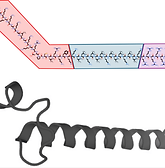

We report a blueprint for the rational design of G protein coupled receptor (GPCR) ligands with a tailored functional response. Notably, for the first time these fluorescent probes retain their inverse agonist functionality, high affinity, and selectivity for CB2R independent of linker and fluorophore substitution.

This novel, membrane-based Gαi protein activation assay is applicable to other Gαi-coupled GPCRs, including orphan receptors, allowing real-time higher-throughput measurements of receptor activation.

Herein, we report the first ligand-directed covalent (LDC) labelling of CB2R enabled by a novel synthetic strategy and application of platform reagents. The LDC modification allows visualization and study of CB2R while maintaining its ability to bind other ligands at the orthosteric site.